Nationally recognized hospital cuts HVAC energy 30% with R-Zero. Free Energy Assessment

Higher education

Verified energy savings.
No capital plan required.

20-40% HVAC energy reduction campuswide.
No capital. No waiting on funding. Results this academic year.

See how much you could save

The campus energy gap

Semester or summer break.
Your HVAC doesn't know the difference

HVAC drives roughly 50% of a university's energy budget. Most systems are sized for peak — full lecture halls, packed labs, every seat filled. But a near-empty auditorium still gets conditioned like it's full. A library at midnight runs the same airflow as noon. Winter break looks like move-in week to your air handlers.

R-Zero fixes that by conditioning your buildings for who's actually in them, not who might be.

Reduces HVAC
energy 20–40%

No capital
approval required

Works through your
existing BMS

Senses real-time headcount

R-Zero vs Alternatives

Every path to efficiency runs through capital.
Except this one.

 

R-ZERO
4-8 weeks

Physical AI on your existing BMS, No capital request, no approval chain. Verified results in 4–8 weeks, paid from shared savings.

Chase grants
1.5-3+ years

Slow, competitive, and rarely full scope. When funding arrives, it comes with reporting requirements and restrictions

Capital funding
3-5+ years

Years out, never guaranteed, competing with deferred maintenance and new construction. Energy waste continues while waiting.

Absorb the cost
Never

Energy budgets grow, something else gets cut. The maintenance backlog gets longer every year.

Campus impact

What's your priority?

20–40% HVAC energy reduction, paid as a share of verified savings — it hits your P&L only after it pays for itself.

Verified CO₂ reduction this academic year. ~78% airflow reduction during low-occupancy periods; a typical zone avoids 2.4 metric tons and 5,200 kWh annually. Audit-ready for Building Performance Standards.
Your BMS, air handlers, and controls contractor all remain intact. Zone-level sensors count people directly and run ASHRAE Occupied Standby control with continuous commissioning. Comfort held to a strict SLA. Faults surface before they become work orders.
AI Energy Efficiency

How it works

Sense

Zone-level sensors count actual real-time headcount directly in classrooms, labs, libraries, and admin buildings. No lagging CO₂ estimates, cameras, personal data, or student privacy concerns.

Optimize

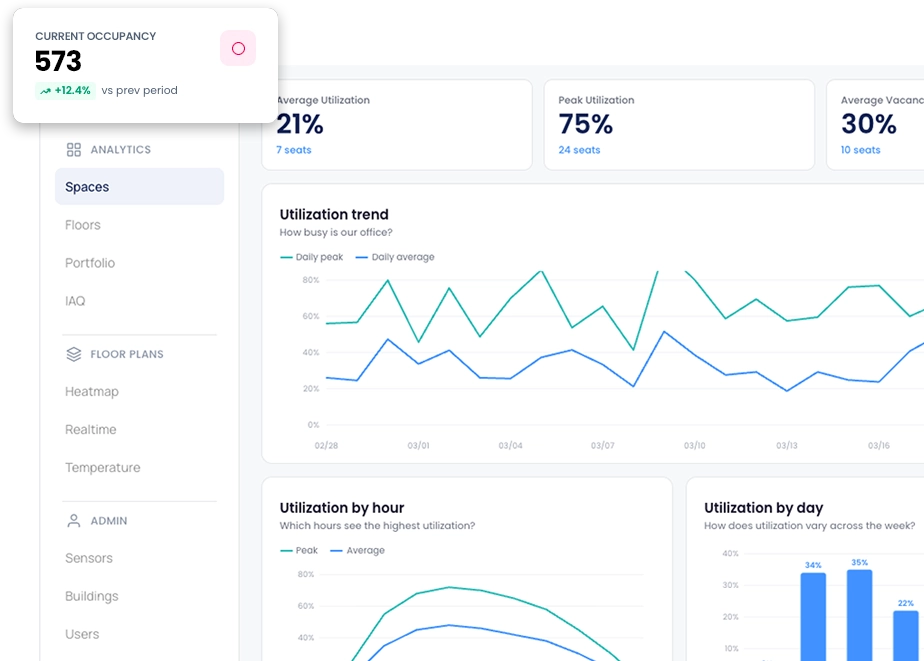
Connect calculates outdoor air volume per zone using occupancy, weather, and BMS signals. ASHRAE 62.1-compliant at all times.

Act

Setpoint adjustments write to your BMS via BACnet gateway with continuous commissioning reads. The loop runs autonomously through semesters, breaks, and everything in between.

Save

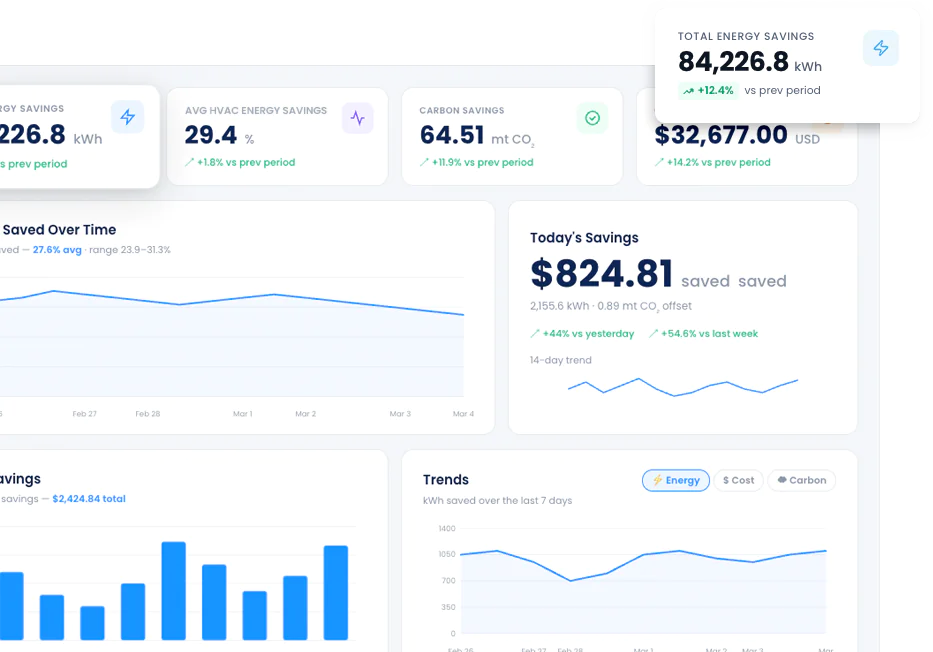
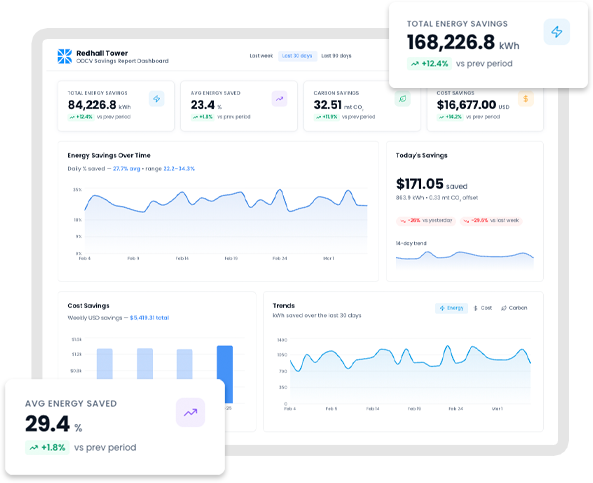
Every adjustment is logged. Energy savings, occupancy trends, and air quality data flow into Connect, giving your team a verified picture of performance.
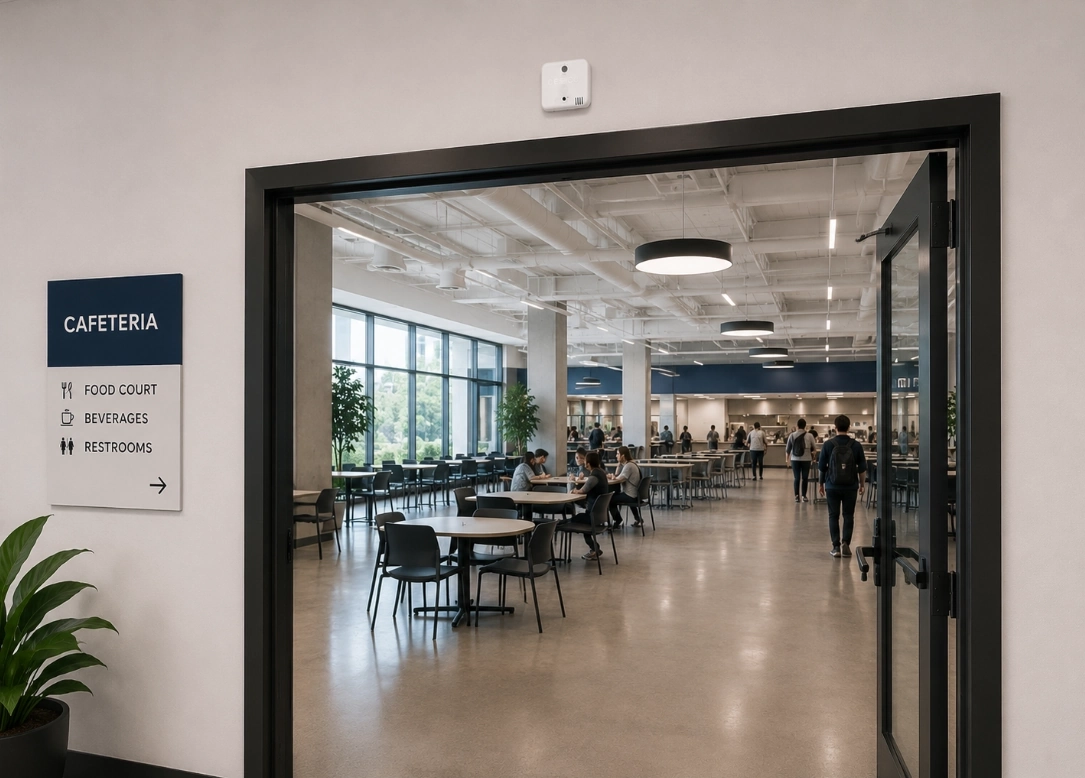
Sense — zone-level occupancy sensors
Optimize — Connect calculates outdoor air volume
Act — BMS setpoint adjustments via BACnet
implementation

4-8 weeks from discovery to documented results

R-Zero runs the entire deployment in coordination with your controls contractor. Sensors install during breaks or off-hours — ceiling-mounted, unobtrusive, no construction. Zero disruption to classes, labs, or campus operations.

01

Install

Wireless sensors deploy across your building in days. No downtime, no disruption.

02

Configure

Software connects to your existing BMS and establishes control sequences.

03

Audit & validate

Energy baselines are set. Every result measured against agreed data.

04

Rapid results

AI-powered ventilation goes live. Verified savings delivered.

Shared-savings model

R-Zero is paid from the savings it creates

No upfront cost,equipment purchase or capital funding.

R-Zero is paid as a share of verified energy cost reduction — verified in your utility bills, not estimated. If the savings aren't there, you don't pay. R-Zero monitors performance continuously — if savings drop, it's our problem, not yours. Start with one building and scale as results prove out.